
Carteret City Directory Holdings
Carteret city directory material is spread across regional titles. The New Jersey State Library guide places Carteret in Rahway and Perth Amboy runs, while the local history record adds the Roosevelt name used before the borough became Carteret. That catalog pattern matters. A title that lacks Carteret can still include it, and a search that uses only the current borough name can miss the right reel. Record the title, year, segment, reel, and the place labels used by the source. The State Library guide is the strongest location and coverage reference for these historical volumes.
| Collection | Years | Where held | Access route |
|---|---|---|---|
| Wand's City of Rahway, Carteret, Port Reading, Sewaren and Woodbridge Directory | 1904 | New Jersey State Library, Rahway Segment IV Reel 24 | Use the library guide and confirm the reel |
| Carteret, Chrome & Port Reading City Directory | 1906 | Genealogy indexes and State Library context | Verify the host item before relying on an image |
| Richmond's Perth Amboy regional directory | 1912-1918 | New Jersey State Library, Perth Amboy Segment IV Reels 18 and 19 | Microfilm-location guide |
| Newspapers, photos, and local-history leads | Varies | Carteret Historical Committee and local repositories | Ask for the title, date, and access method |
Later Richmond titles do not consistently print Carteret in the title. Search neighboring place names only when the volume itself names them, then inspect the address and institution fields before connecting a listing to Carteret. The State Library's location codes distinguish books, rare books, public-library or historical-society microfilm, Gale directory reels, and fiche, so a useful citation should preserve that code rather than merely saying that a volume is at the library.
Note: Carteret directory evidence is strongest when the collection title, year, place label, and reel or segment are retained with the result.
Carteret City Directories Under Regional Titles
The 1904 Wand's title explicitly covers Carteret alongside Rahway, Port Reading, Sewaren, and Woodbridge. The 1906 title adds Chrome and Port Reading. Richmond's 1912 through 1916 titles place Carteret with Perth Amboy, Woodbridge, Chrome, Sewaren, Port Reading, Fords, and Keasbey; the 1917 and 1918 volumes are on a later Perth Amboy reel. These are separate snapshots, not a continuous annual Carteret roll. A missing name may mean the person moved, was not listed, appeared under a variant spelling, or falls in a gap between surviving runs.
Use the printed coverage as a boundary. A hit in a source that also covers Perth Amboy or Rahway is not, by itself, a Carteret household. Compare the exact street, the source's municipality label, and any institution or family context. The Carteret Public Library's FamilySearch affiliate access can help with related census, land, court, birth, marriage, and death discovery, but it does not turn an index lead into a confirmed Carteret address.
Carteret City Directory Research Desks
Carteret Public Library, at 100 Cooke Avenue, supplies digital resources and is a local starting point for FamilySearch affiliate discovery. Its website does not publish a complete Carteret-specific city-directory or obituary inventory. Ask the reference desk about local newspapers, vertical files, yearbooks, microfilm, historical photographs, and the exact directory year needed. For community history, the Carteret Historical Committee meets publicly at the Blazing Star Cultural Arts Center and is a referral point for former street names, borough chronology, photographs, and newspaper context.
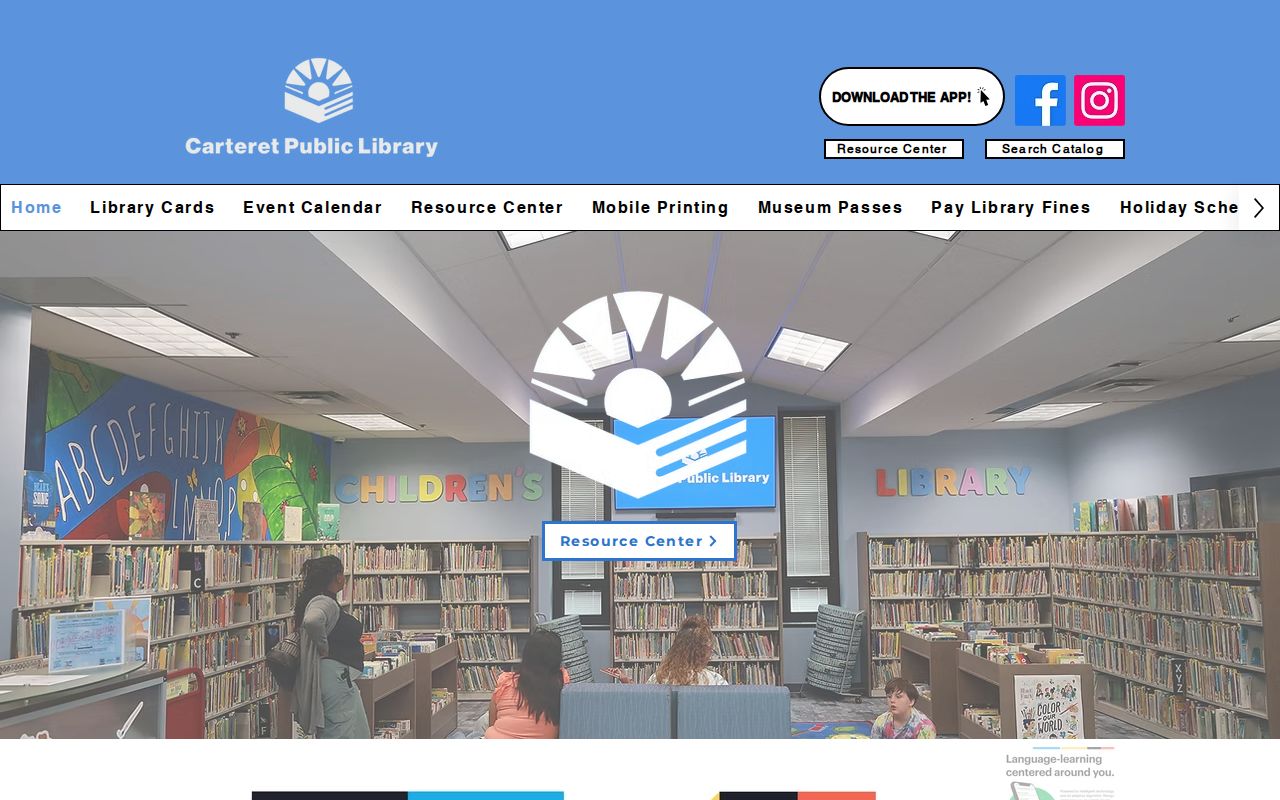
The Carteret Public Library is the source of the local research view shown below.
Start with a collection title, surname, street, year, and the access method requested. That level of detail lets library staff tell a researcher whether a directory is online, on microfilm, in a reading room, or absent from a local shelf.
The Middlesex County Kler Reading Room and History Hub add regional reference material, artifacts, photographs, and documents. The History Hub catalog supports person, place, organization, object, and collection searches, but Carteret coverage was not exhaustively indexed. Treat a catalog hit as a lead, then confirm whether it has a digital object or needs an appointment.
Carteret City Directory Names Before 1906
Carteret was formerly Roosevelt, a change that creates a real catalog problem rather than a small wording difference. Search both terms in directories, municipal history, newspapers, and address research. The Historical Committee identifies The Roosevelt News for 1908 through 1922 and Carteret News for 1922 through 1945, followed by later title variations. An old source can correctly say Roosevelt even where a modern catalog normalizes the place to Carteret.
| Before 1906 | Search Roosevelt as well as the current Carteret place name. |
|---|---|
| 1904 | Wand's regional run includes Carteret in its title. |
| 1906 | A Carteret, Chrome & Port Reading directory is identified in genealogy indexes. |
| 1912-1918 | Richmond regional titles are located on Perth Amboy Segment IV reels. |
That name transition is a local records story. It also explains why a search needs the street and date beside the place name. Carteret and Roosevelt are not interchangeable labels for every source, even though they point to the same municipality across different periods.
Reading a Carteret City Directory Listing
A city directory entry should be read as a dated listing, not a modern identity record. Preserve the spelling exactly as printed, including initials and suffixes, then note the street number, street spelling, municipality label, directory year, and collection identifier. An occupation can be recorded when the source actually prints one, but it is a historical descriptor, not a current fact. A business, boarding location, mailing point, or prior address can appear in a directory, so a single line should never be relabeled as legal residence without corroboration.
| Name form | Keep the printed surname, initials, alternate spelling, and suffix. |
|---|---|
| Address line | Capture the number, street spelling, and place label used in that volume. |
| Historical detail | Record an occupation, institution, or relationship only if the entry prints it. |
| Source key | Keep the title, year, segment, reel or other collection code, and image or page reference. |
| Interpretation | Describe the person as listed at the address unless another source establishes more. |
- Criss-cross directory
- A reverse directory organized by street and address rather than by name. Carteret-specific criss-cross runs were not confirmed in the research, so ask the repository rather than assume one exists.
- Householder index
- An index that groups a volume around a household or address. Whether one is available depends on the particular directory or repository finding aid.
- Abbreviation key
- A legend in the volume that explains its shorthand. Photograph or transcribe it before interpreting an unfamiliar listing.
Tracing Carteret City Directory Households
For family history, build a dated sequence instead of one large name list. Start with the earliest confirmed appearance in a Carteret city directory or regional title. Copy the exact address and place name. Then compare the next available directory run, not an assumed yearly volume. Pair a directory period with a census, deed, newspaper notice, probate reference, cemetery record, or vital record as the date and access rules allow. The aim is to identify what each source says, not to force every result into the same story.
- Find the name in one verified directory run and preserve its title, year, page or image, and location code.
- Search the next surviving Carteret or regional run with spelling variants and both Roosevelt and Carteret where the date calls for it.
- Compare the street line with the applicable census or state schedule, keeping each source's date separate.
- Use newspaper and repository searches for family, institution, or street context, then label them as contemporary reporting or local-history leads.
- Confirm an ownership question with a recorded deed or assessment source rather than relying on a directory listing.
A disappearance from the directory has more than one explanation. The person may have moved, died, changed a name, been omitted, or fallen between surviving volumes. The New Jersey State Archives genealogy collections are a useful next repository for census schedules, vital records, deeds, Surrogate material, and other historic state and county context.
Carteret City Directory Archive Routes
When the local shelf is thin, move outward in a documented order: Carteret Public Library and the Historical Committee for local context; the Kler Reading Room and History Hub for Middlesex material; Rutgers for central New Jersey family collections; the State Library for its directory guide and microfilm locations; and the State Archives for official historic records. The Rutgers genealogy guide identifies central New Jersey and Middlesex family material in the Esther Serviss and Albert Stokes collections, including card indexes and call-slip access. Those collections are for family reconstruction and historical context, not a guaranteed Carteret resident list.
The State Archives is free to use in Trenton, subject to space for walk-in or appointment visits. Its holdings include state vital records, census and special schedules, county deeds, Surrogate records, wills and inventories, court material, naturalization, and extensive microfilm. For a research request, provide the collection title, surname, date, place, and call number or reel when known. A repository can then give an accurate answer about digitization, access limits, and an in-person visit.
Note: A directory result can start a household trail, but a repository record should retain its own date, title, and evidentiary weight.
Carteret City Directory Gaps and Requests
No official borough-wide online resident directory was located. That does not mean Carteret records are absent. For existing municipal material that is not indexed online, use the borough's OPRA request form and identify a specific existing record, address, date range, or index. The form accepts delivery choices for pickup, mail, on-site inspection, fax, and email when the agency can preserve record integrity. A request that asks a custodian to create a broad directory is less useful than one naming the records sought.
New Jersey OPRA, N.J.S.A. 47:1A-1 et seq., generally sets a seven-business-day target for a current, identifiable record after the correct custodian receives a complete request. It does not bypass vital-record eligibility, sealed court restrictions, or protected addresses. Use the clerk for local administrative records, the library and Historical Committee for historical context, and the listed county or state repository for its own materials. Keep a copy of the request, delivery proof, response date, cost, and any stated redaction reason.