
Carteret Resident Lookup Record Coverage
A Carteret resident lookup is a way to verify a specific record, not a single master file. Start with the question you need answered. A parcel record can connect a name to recorded ownership or a mailing address at a stated date. A court result can identify a party and a case venue. A voter result is dated registration information. Vital and license records each have their own access limits. Keeping those labels separate prevents a name match from becoming an unsupported claim about a Carteret resident.
| Record route | Question it can answer | Carteret-area custodian | Access route |
|---|---|---|---|
| Land instrument | Was a named party recorded on a deed or instrument? | Middlesex County land records | Public index; image and copy options vary |
| Assessment card | Which block, lot, and assessment snapshot match an address? | Carteret assessment search | Public search |
| Election status | Does the exact-name query return a dated registration status? | New Jersey voter status check | Official status route; protected fields stay excluded |
| Court case | Is a party named in a case, venue, or docket? | New Jersey Courts case hub | Portal and record-specific rules |
| Vital event | Is the right certified or genealogy request available? | New Jersey vital records | Eligibility and age rules apply |
| Professional credential | Does a license match the stated profession and city? | Consumer Affairs verification | Public verification search |
For a common name, begin with the record that includes the independent key already in hand. An address points first to the Carteret assessment and County Clerk routes. A civil case question belongs in the court system. A family-history question may need the local health department, the state vital-record form, or the State Archives. A credential should be checked against license type, status, city, and number rather than a name alone.
Match a Carteret Resident First
Use at least two independent match keys before connecting results. Carteret spelling, a middle initial, suffix, street address, approximate year, parcel number, docket number, or family relationship can separate people with similar names. Preserve the source's own wording. A deed may say a person was a grantor or grantee. An assessment card is a dated tax record. A directory or newspaper may say only that someone was listed at an address. None of those labels alone establishes present residence.
The old Roosevelt place label matters in Carteret searches. Older directories, newspapers, and local material can retain Roosevelt even when a modern portal uses Carteret. Search both labels, retain the original spelling in notes, and record the query date and result category. That small discipline makes later confirmation possible and helps avoid joining results that only appear to match.
Note: Keep the source URL, search terms, displayed date, and the reason two records were treated as the same person.
Court Paths for a Carteret Resident Lookup
Court research begins with venue. Carteret Municipal Court handles the borough's municipal jurisdiction, while civil, criminal, judgment-lien, Tax Court, and other matters use separate New Jersey court routes. The state public case hub is the starting point for current options. NJMCDirect is a ticket and complaint route, not a general resident search. A municipal result should never be treated as a substitute for a civil or criminal search in the proper portal.
The Civil Case Jacket is the clearest documented party-name search. Its individual form requires last and first name, with middle initial optional. Short names of two characters or fewer match exactly; names of three or more characters broaden the result set. Select the individual or business option carefully. The result screen can identify the party, venue, docket number, case caption, and initiation date, but a public result does not promise every filing image or document text.
| Civil Case Jacket input | Individual or Business choice; individual Last and First required, MI optional |
|---|---|
| Useful narrowing | Middle initial and the correct party type, then the case venue and date |
| Result labels | Name, Venue, Docket Number, Case Caption, and Case Initiation Date |
| Result controls | Search, reCAPTCHA, docket link, and First/Previous/Next/Last pagination |
See the New Jersey Civil Case Jacket public-access entry before using its party or docket routes.
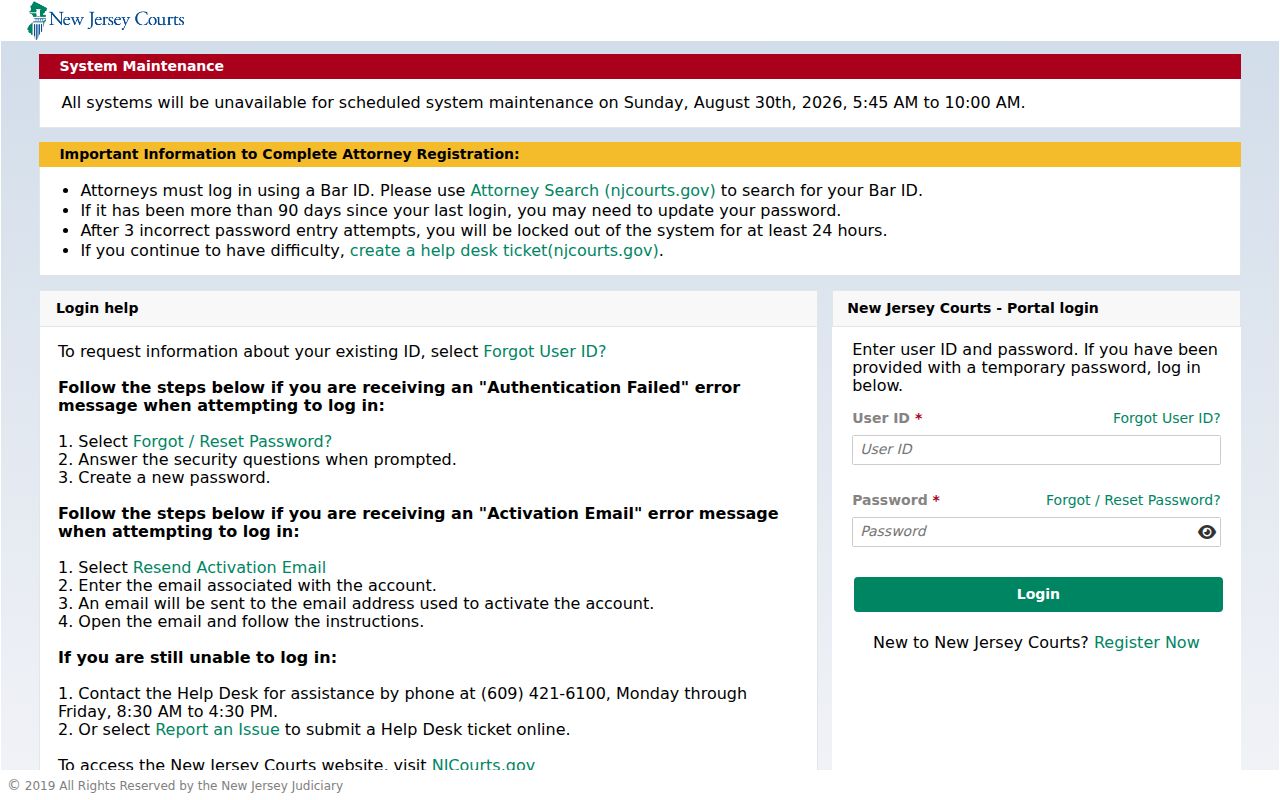
The public-access screen is a useful reminder that case category, party type, and court venue must be recorded with any Carteret result. A docket is the court's identifying number for a case, not proof of a person's current address or legal outcome.
Carteret Vital Records in a Resident Lookup
For a Carteret event, ask the Carteret Health Department whether the record is held locally or has transferred to the state, and which copy type fits the request. The local office handles certified birth, death, and marriage copies as well as related services. New Jersey Department of Health forms govern statewide ordering. Certified copies require an eligible relationship, identity, and relationship evidence. A general records request cannot bypass those gates, and adoption material follows separate rules.
Genealogy access is different. The state identifies thresholds for a deceased person's birth record older than 80 years through 1925, marriage older than 50 years through 1951, and death older than 40 years through 1951. Genealogical requests need a full name, event city or county, and year. Exact date, parents' names, or a death-record SSN can help where appropriate. The State Archives is the route for records older than 100 years. The research documented a 10 to 12 week genealogy mail estimate and listed the first-copy, certification, or no-record fee at $25, so confirm the live form before sending payment.
Review the state genealogy eligibility and ordering instructions before choosing a request type.
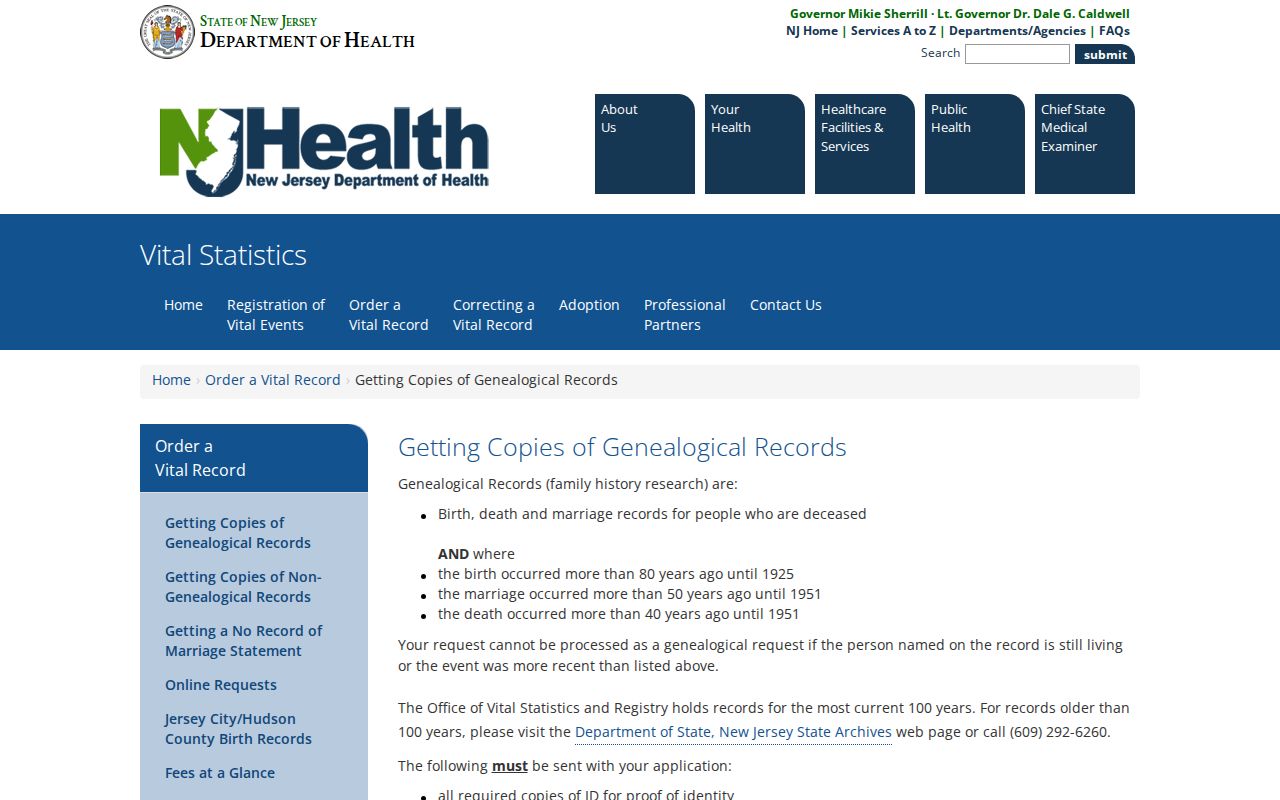
The state route distinguishes a copy request from a claim about a living person's address. Record whether the result was a certificate route, a possible genealogy copy, a restricted certified copy, or no record located.
Verify a Carteret Resident Across Records
Once a promising result appears, anchor it to a second official record. The order below keeps the work focused on one person and one question. It also leaves a clear trail when a match is weak. A property record can establish a parcel connection, but ownership is not occupancy. A voter status response is dated election information, not a current-address guarantee. Court and vital sources have their own controlled access paths.
- Write down the name exactly as returned, plus a second key such as a Carteret address, year, court venue, or license number.
- Use the Carteret assessment card or County Clerk index to identify block, lot, instrument, or a dated title connection when the question involves property.
- Check the relevant court, voter, vital, or credential custodian, preserving the source label, date, and result category rather than copying sensitive fields.
- Request a permitted record copy from the custodian only when the official result still needs confirmation. Keep any redaction intact.
- Docket
- A docket is the court's tracking number for a particular case. It helps distinguish cases with similar party names.
- Index and image
- An index lists key record fields so an item can be found. An image is a view of the document and may have separate viewing, copying, or redaction rules.
- Certified copy
- A certified copy is an official copy issued under the custodian's rules. Eligibility, identification, and relationship evidence can be required.
A negative result is still useful. Note the portal searched, date range, spelling, and date checked. “No exact party match” is more precise than saying a person has no record, especially where coverage begins at a stated year or a public form has limited fields.
Carteret License Records Need More Keys
A credential can verify a professional or business-facing record, but it does not establish a private home address or present activity. New Jersey Consumer Affairs supports person and business verification with Profession, License Type, First/Mid Name, Last Name, License Number, and City. Any combination may be used, partial words are allowed, and the minimum is two characters. Match the returned profession, license type, status, date, and number before treating a same-name result as relevant to a Carteret resident lookup.
The New Jersey license verification search separates the credential search from business records and roster downloads.
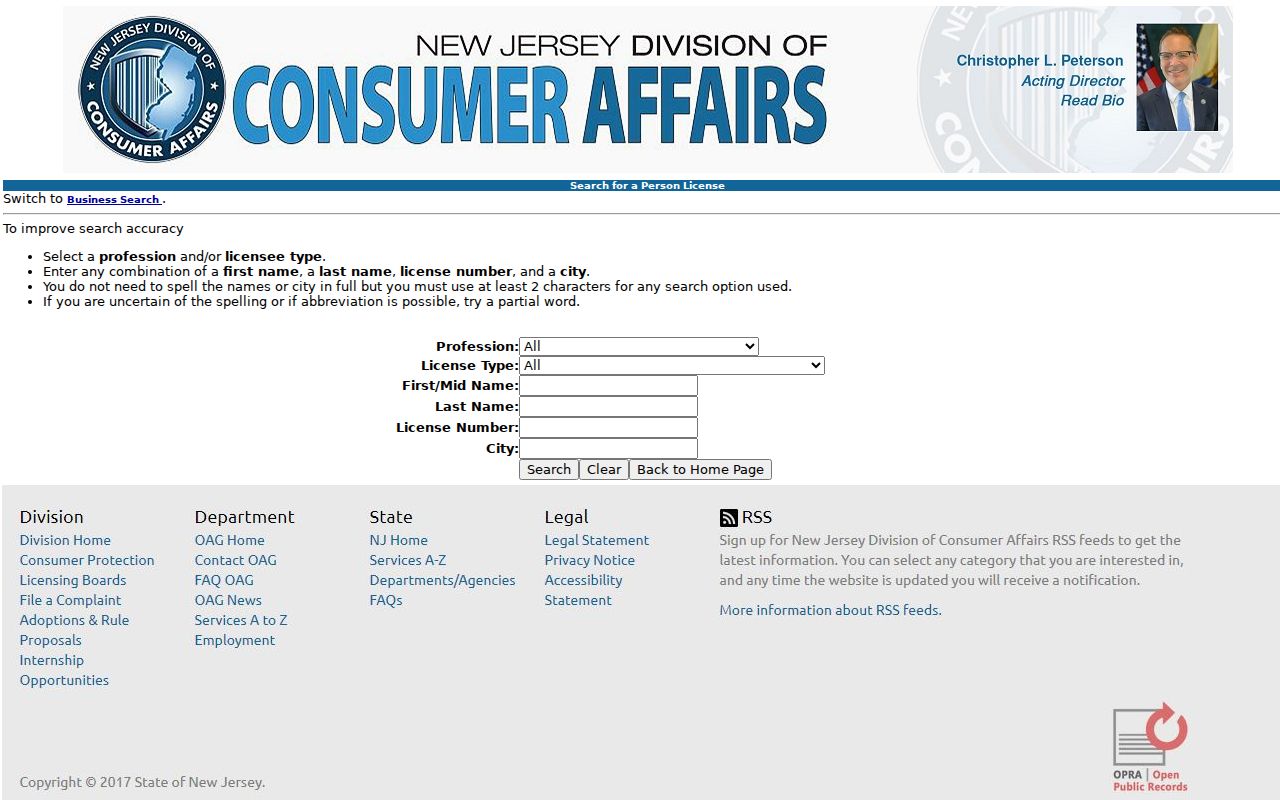
The screen is best used as a verification tool. For a trade name or entity filing, keep the entity ID and filing date with the result and avoid treating a registered-agent or business address as a person's residence.
Note: A matching license name needs profession, status, city, number, and date before it supports a Carteret identification.
Carteret Resident Lookup Uses Roosevelt Too
Historic Carteret research sometimes begins with Roosevelt. The borough was formerly called Roosevelt before the 1906 name change, and the Carteret Historical Committee identifies the Roosevelt News from 1908 through 1922 before the Carteret News title. Older catalog entries can also place Carteret within Rahway or Perth Amboy directory coverage. Search the historical place name alongside the current one, inspect the street and date, and treat a newspaper or directory mention as a point-in-time lead. The verified directory runs and their reel details belong with the Carteret city directory collections.
Carteret Resident Lookup Privacy Boundaries
A missing address can be an intentional protection. New Jersey's Address Confidentiality Program provides a substitute address for eligible participants, while Daniel's Law can shield covered home addresses and unpublished telephone numbers. County, state, and municipal systems may show redacted fields. Voter lists also exclude signatures, ID numbers, protected addresses, and victim-program information. Court dockets may be public while document text, family material, identifiers, or sealed records remain restricted. Stop at the redaction and use the listed custodian for correction or access questions.
The Carteret OPRA form is a fallback for existing municipal records with a specific record type, address or block and lot, and date range. It is not a way around vital-record eligibility or court restrictions. New Jersey's ordinary target for a current identifiable OPRA request is seven business days after the correct custodian receives it, subject to clarification, partial response, denial, or other documented outcome.
Lawful use. Use Carteret resident lookup results for lawful personal research and source verification. Do not use a record to threaten, intimidate, harass, stalk, or expose protected details about anyone.